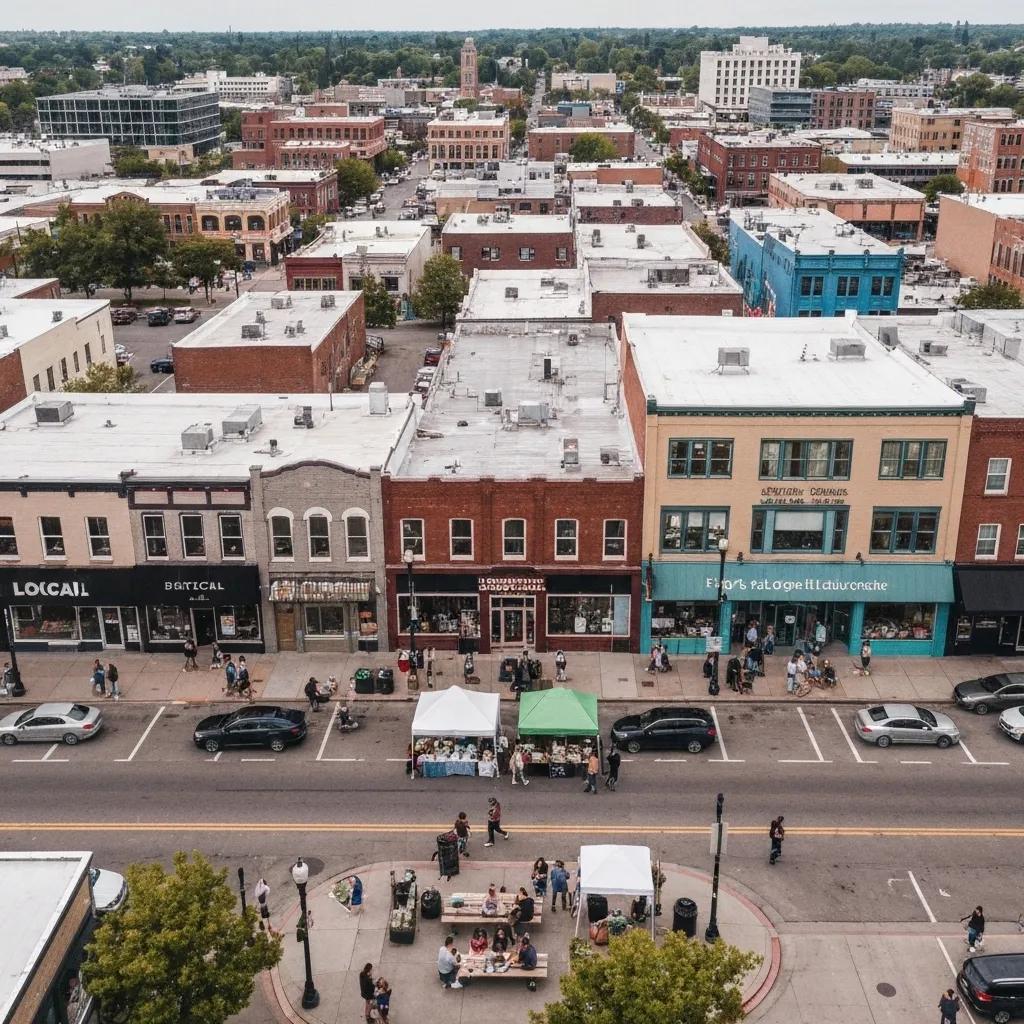
The Placelessness Epidemic: Why Every City is Starting to Look the Same and How to Reclaim Urban Identity
Cities around the globe are losing their distinctive character, succumbing to a uniform landscape of glass-and-steel towers, cookie-cutter retail outlets, and identical public spaces.
Understanding this phenomenon—known as placelessness—reveals why modern urban environments often lack emotional resonance and local pride. By examining its causes, consequences, and the role of advanced tools like Google’s Gemini AI, readers will learn how to restore unique community identity, deploy context-sensitive design, and foster sustainable renewal. This guide covers:
- Core definitions and historical roots of placelessness
- Drivers behind generic urbanism and its social costs
- Case studies of cities facing identity erosion
- Strategic frameworks for reclaiming place distinctiveness
- How Gemini analyzes data, generates design concepts, and engages communities
- Emerging trends that counter homogenization and shape future cities
Through this roadmap, urban planners, policymakers, and residents can transform generic cityscapes into vibrant, locally meaningful places.
What Is Placelessness and How Does It Affect Cities?
Placelessness defines the process by which urban environments lose unique character, driven by standardized development and global architectural trends, and leads to diminished community connection. Recognizing this concept empowers stakeholders to diagnose loss of place identity and to implement strategies that reinforce cultural distinctiveness.
Place and Placelessness
Edward Relph’s seminal work defines placelessness as the weakening of unique place identity due to the homogenizing effects of modernization and standardized development. He argues for the profound importance of authentic place attachment and a strong sense of place for human experience and well-being, noting how mass production and uniformity diminish these connections.
This foundational text directly defines placelessness and its historical roots, as discussed in the article’s initial sections on core definitions and the evolution of generic urbanism.
Key characteristics of placelessness include:
- Repetition of identical building forms and façades
- Homogenized retail and corporate signage
- Absence of local materials or vernacular design
- Public spaces lacking cultural references
These traits erode emotional bonds and prepare the ground for exploring the theorists and history behind generic urbanism.
What Does Placelessness Mean in Urban Contexts?
In urban contexts, placelessness describes environments that fail to reflect local history, culture, or geography. Areas dominated by global brands and uniform architectural forms create “everywhere” places, reducing inhabitants’ sense of belonging and attachment. Recognizing local landmarks, traditions, and spatial narratives counters this phenomenon.
Who Are the Key Theorists Behind Placelessness?
Edward Relph and Marc Augé pioneered the study of place identity. Relph’s work on place attachment examines how physical settings shape personal and social identity. Augé introduced the concept of “non-places”—transient spaces like airports or chain stores devoid of relational or historical meaning. Their theories establish why generic urbanism fragments community bonds.
Marc Augé’s concept of non-places highlights how certain modern environments fail to foster social interaction or develop shared identity. Augé argues that when spaces lack meaningful markers, individuals experience anonymity rather than attachments.
Non-Places: Introduction to an Anthropology of Supermodernity
French anthropologist Marc Augé introduced the concept of “non-places” to describe transient spaces such as airports, highways, and shopping malls that lack sufficient historical, relational, or identity-forming characteristics. These environments contribute to a sense of anonymity and diminished social interaction, contrasting with “anthropological places” that foster identity and shared social references.
Augé’s theory of non-places provides a key theoretical framework for understanding how generic urbanism fragments community bonds and reduces inhabitants’ sense of belonging, as highlighted in the article.
How Has Generic Urbanism Evolved Historically?
Generic urbanism traces back to modernism and the International Style, which prioritized functionality, mass production, and minimal ornamentation. Post-war reconstruction favored cost-efficient, repeated forms over craftsmanship. This evolution normalized homogeneous building practices and standardized zoning, setting the stage for today’s placeless metropolitan corridors.
What Are the Main Drivers of Urban Homogenization?

Urban homogenization arises from intertwined economic, cultural, and regulatory forces that standardize cityscapes at scale. Understanding these drivers is crucial for crafting interventions that restore differentiation.
How Does Globalization Influence City Identity?
Globalization spreads standardized architectural styles, multinational retail outlets, and common consumer experiences across continents. Economic imperatives prioritize brand recognition and investment security, leading to glass curtain walls and generic malls that overshadow historic streetscapes. This process diminishes cultural diversity and weakens place attachment.
What Role Does Corporate Architecture and Consumerism Play?
Corporate architecture enforces identical store layouts, façades, and signage to maintain brand consistency worldwide. Mass-produced building components and uniform interior design limit opportunities for local artisans and materials. The result is a homogenized shopping experience that deprives neighborhoods of local flavor and craft traditions.
How Do Urban Planning Policies Contribute to Loss of Local Character?
Many planning codes emphasize efficiency, density, and generic safety standards over cultural resonance. Common policy issues include:
- Overly broad zoning that ignores neighborhood context
- Incentives for large-scale developers at the expense of small businesses
- Lack of heritage protection for historic buildings
- Minimal requirements for public art or local material use
These regulatory trends streamline development but sacrifice the distinctiveness that fosters community pride.
What Are the Social, Cultural, and Psychological Impacts of Placelessness?
Homogenized cities trigger social isolation, cultural erosion, and psychological distress by severing connections between people and place. Recognizing these impacts underscores the urgency of reclaiming urban identity.
- Reduced social cohesion and community bonds
- Loss of traditional practices and local festivals
- Elevated feelings of alienation and disorientation
Identifying these consequences sets the stage for exploring specific social, psychological, and environmental dynamics.
How Does Placelessness Cause Social and Cultural Erosion?
When cities adopt universal designs, local customs and communal spaces disappear. Traditional meeting points—markets, plazas, small parks—are replaced by branded venues, reducing informal social interactions. As cultural rituals fade, collective memory weakens and neighborhood solidarity fractures.
What Are the Psychological Effects of Urban Homogenization?
Urban homogenization undermines mental well-being by disrupting place attachment—the emotional bond people form with meaningful environments. Common psychological responses include:
- Alienation: Feeling disconnected from surroundings
- Anxiety: Experiencing stress in unfamiliar, impersonal spaces
- Reduced Belonging: Lower motivation to engage with local community
These effects illustrate why preserving unique urban character supports both individual and collective health.
How Does Environmental Psychology Explain These Impacts?
Environmental psychology examines how built environments influence human behavior and emotions. Studies show that distinct, meaningful settings enhance cognitive mapping, foster social interactions, and improve overall life satisfaction. Conversely, non-places inhibit memory recall and weaken spatial identity, driving the need for design that values place specificity.
Which Cities Are Experiencing the Most Severe Identity Crisis?
Several global metropolises illustrate the extremes of generic urbanism, where local distinctiveness has given way to uniformity. Examining these examples helps urbanists spot warning signs and learn from varied contexts.
Cities facing acute placelessness include:
- Dubai (rapid, branded development overshadowing heritage)
- Shenzhen (new districts lacking cultural anchors)
- Las Vegas (ephemeral replicas of global landmarks)
These cases demonstrate how unchecked growth and branding can erode sense of place and guide contrasts with thriving, unique urban environments.
What Are Examples of Cities Losing Their Unique Character?
In rapidly developing cities, heritage districts are razed for high-rise complexes that mimic international styles. Iconic street patterns vanish beneath pedestrian malls featuring identical chain outlets. Once-vibrant marketplaces now resemble franchised food courts, signaling a collapse of local distinctiveness.
How Do Unique Urban Spaces Contrast with Generic Ones?
Observing these distinctions emphasizes why authentically designed places foster stronger community identity and vitality.
How Can Cities Reclaim Their Unique Identity and Resist Placelessness?
Cities can restore distinctiveness by empowering residents, embracing local materials, and enacting thoughtful policies. These strategies rebuild cultural bonds and inspire civic stewardship.
Effective strategies include:
- Community-led placemaking initiatives
- Adaptive reuse of historic structures
- Zoning reforms that favor local businesses
- Incentives for context-sensitive design
Implementing these measures reactivates dormant traditions and sets a foundation for sustainable regeneration.
What Is Community Placemaking and Why Is It Effective?
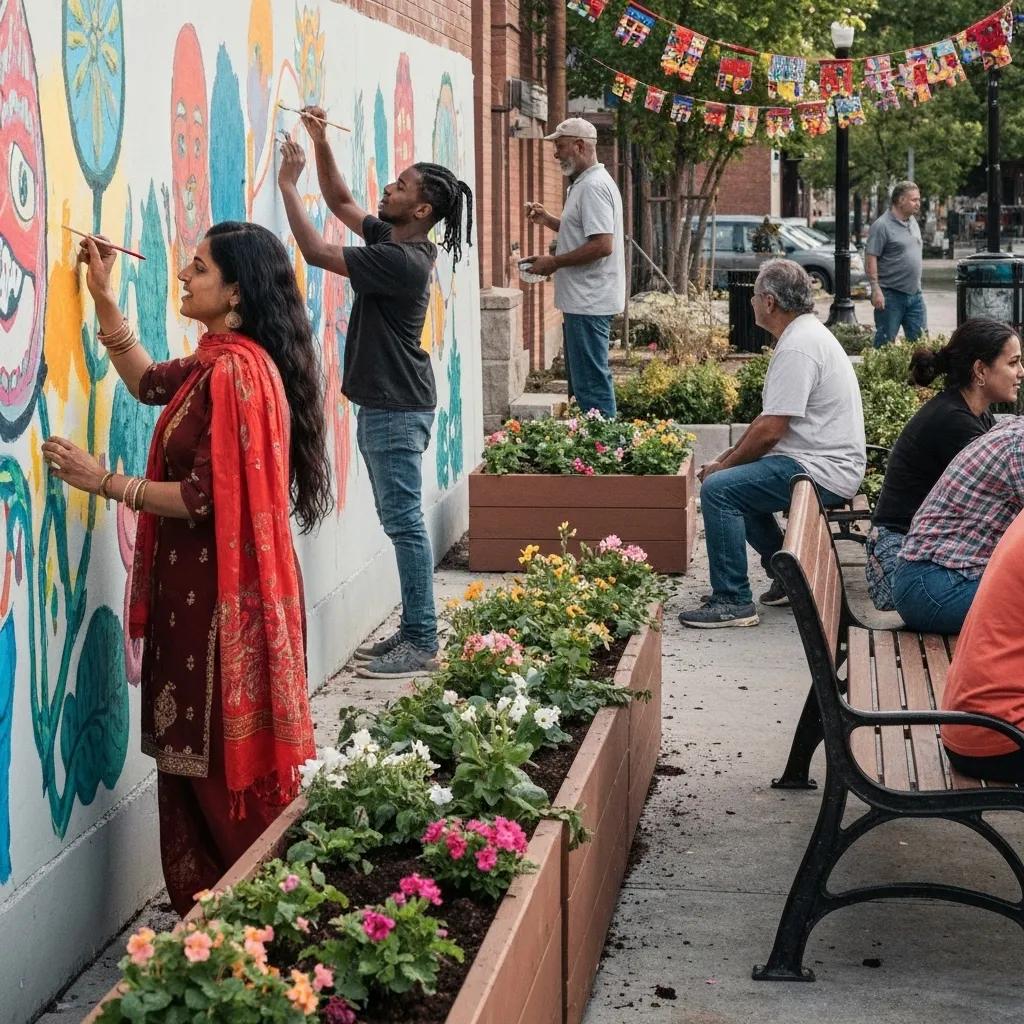
Community placemaking involves residents in designing public spaces that reflect shared values and local heritage. This participatory approach enhances place attachment by:
- Leveraging community knowledge of local narratives
- Incorporating cultural art and performances
- Creating flexible spaces for festivals and markets
Engaging citizens ensures that public environments resonate with the people who use them most.
How Can Sustainable and Context-Sensitive Urban Design Help?
Sustainable design rooted in local context uses:
- Adaptive Reuse of existing heritage buildings
- Locally Sourced Materials that showcase regional textures
- Green Infrastructure that enhances ecological and social well-being
By aligning new developments with local climate, culture, and resources, cities maintain character while advancing resilience.
What Policy Recommendations Support Preserving Urban Character?
Policy frameworks should:
- Protect historic districts through heritage overlays
- Offer tax incentives for small, independent businesses
- Mandate design review boards with local representation
- Establish grants for public art and cultural projects
These regulations create an environment where unique identity can thrive rather than be replaced.
How Can AI, Specifically Gemini, Help Combat the Placelessness Epidemic?
Gemini’s advanced multimodal AI capabilities empower stakeholders to diagnose placelessness patterns, generate context-sensitive design proposals, and foster community collaboration—accelerating the journey toward distinct urban identity.
How Does Gemini Analyze Urban Data to Identify Placelessness?
Gemini processes satellite imagery, zoning maps, and demographic datasets to detect areas of repetitive building forms and commercial uniformity. By mapping architectural homogenization indices, it highlights neighborhoods at risk of cultural erosion and informs targeted interventions.
In What Ways Can Gemini Generate Innovative Urban Design Concepts?
Using local material databases, historical archives, and community input, Gemini produces diverse design proposals that integrate vernacular styles, climate-adapted green spaces, and culturally significant motifs. Its generative models accelerate ideation while preserving authenticity.
How Does Gemini Facilitate Community Engagement and Placemaking?
Gemini synthesizes public feedback from surveys, social media, and workshops to create interactive visualizations that convey design options. This inclusive process strengthens social cohesion by ensuring that design solutions reflect real community needs and preferences.
Digital Placemaking: How American Urban Planners Are Visualizing Cities with AI
This research explores how AI is transforming urban planning by enabling planners to generate photorealistic concept art, create immersive visual experiences, and bridge communication gaps with the public. AI tools facilitate the visualization of future cities, aiding in design iteration and community buy-in for placemaking initiatives by transforming static blueprints into relatable renderings.
This article directly supports the discussion on how advanced tools like Gemini AI can analyze urban data, generate innovative design concepts, and facilitate community engagement to combat the placelessness epidemic.
What Are the Future Trends and Opportunities in Addressing Urban Homogenization?
Looking ahead, communities and innovators are forging new paths to counter placelessness and redefine sustainable urbanism. Recognizing these trends helps cities anticipate shifts and adopt proactive strategies.
What Counter-Trends Are Emerging Against Placelessness?
Key counter-trends include:
- Local Materials Revival: Renewed use of regionally sourced stone, wood, and tile
- Cultural Districts: Designated zones that celebrate specific artistic or culinary traditions
- Pop-up Tactical Placemaking: Temporary interventions testing long-term designs
These movements restore context and test scalable solutions for preserving place identity.
How Will AI and Technology Shape Sustainable Urban Development?
Advancements in AI, IoT, and data analytics will enable:
- Predictive Analytics for assessing design impacts on community well-being
- Digital Twin Platforms to simulate heritage preservation scenarios
- Augmented Reality Experiences that engage residents in local history
By integrating technology with participatory design, cities can achieve resilient, distinctive futures grounded in local context.
Cities around the world can reverse the tide of placelessness by combining community engagement, context-sensitive design, supportive policies, and AI-driven insights. Embracing local heritage and empowering residents restores meaning to urban environments. With innovative tools like Gemini guiding data analysis and participatory design, stakeholders have new pathways to strengthen identity, foster belonging, and build truly unique cities.
Frequently Asked Questions
What are the long-term effects of placelessness on community well-being?
The long-term effects of placelessness on community well-being can be profound. As unique local identities fade, residents may experience increased feelings of isolation and disconnection from their surroundings. This can lead to a decline in social cohesion, as familiar gathering places and cultural practices disappear. Over time, the lack of emotional attachment to the environment can contribute to mental health issues, such as anxiety and depression, as individuals struggle to find a sense of belonging in a homogenized urban landscape.
How can local governments support the preservation of urban identity?
Local governments can play a crucial role in preserving urban identity by implementing policies that prioritize community engagement and cultural heritage. This includes creating zoning laws that protect historic districts, offering grants for local art projects, and incentivizing the use of local materials in new developments. Additionally, fostering partnerships with community organizations can help ensure that urban planning reflects the values and needs of residents, ultimately leading to more vibrant and distinctive urban environments.
What role do community events play in combating placelessness?
Community events are vital in combating placelessness as they foster social interaction and strengthen local identity. Events such as festivals, markets, and cultural celebrations provide opportunities for residents to engage with one another and celebrate their unique heritage. These gatherings can revitalize public spaces, making them more inviting and meaningful. By encouraging participation and collaboration, community events help to create a sense of belonging and attachment to the local environment, countering the effects of homogenization.
How can technology aid in the fight against urban homogenization?
Technology can significantly aid in the fight against urban homogenization by providing tools for data analysis, community engagement, and design innovation. For instance, AI can analyze urban patterns to identify areas at risk of losing their unique character. Additionally, digital platforms can facilitate community input in the planning process, ensuring that local voices are heard. By leveraging technology, cities can create more responsive and context-sensitive designs that reflect the needs and aspirations of their residents.
What are some successful examples of cities reclaiming their unique identity?
Several cities have successfully reclaimed their unique identity through targeted initiatives. For example, Melbourne has embraced its cultural diversity by promoting local arts and crafts, resulting in vibrant street art and community markets. Similarly, Barcelona has focused on preserving its architectural heritage while integrating modern design elements, creating a harmonious blend of old and new. These examples demonstrate that with thoughtful planning and community involvement, cities can restore their distinctiveness and foster a strong sense of place.
How can residents actively participate in placemaking efforts?
Residents can actively participate in placemaking efforts by engaging in community meetings, providing feedback on urban design proposals, and volunteering for local initiatives. Joining neighborhood associations or advocacy groups can amplify their voices in discussions about urban development. Additionally, residents can organize events that celebrate local culture and history, helping to create a sense of ownership and pride in their community. By taking an active role, individuals can contribute to shaping their environment and preserving its unique character.
Conclusion
Cities can reclaim their unique identities by embracing community engagement, context-sensitive design, and supportive policies that reflect local heritage. The integration of advanced tools like Gemini AI empowers stakeholders to analyze urban data and foster meaningful participation in the design process. By prioritizing distinctiveness, urban environments can enhance social cohesion and emotional attachment among residents. Take the first step towards revitalizing your city’s identity by exploring innovative strategies and resources today.